
🏥 Prof. Dr. Cemil Taşçıoğlu City Hospital
Designed as a general service hospital, Prof. Dr. Cemil Taşçıoğlu City Hospital has been planned to serve approximately
1.5 million outpatient visits and 50,000 inpatient treatments per year.
With a total capacity of 785 beds the hospital consists of 3 basement levels, 10 above-ground floors,
and 1 technical floor, covering a total enclosed area of 180.000 m².
A heliport is located on the hospital roof. The facility includes 146 outpatient clinics, 27 operating rooms, 55 emergency beds,
and 81 intensive care units.
The hospital also provides a 475-vehicle parking capacity.
Equipped with advanced energy efficiency systems, the hospital operates a Trigeneration Plant,
enabling it to produce a significant portion of its electricity from natural gas. The waste heat generated during
energy production is utilized for heating and cooling, significantly reducing operational costs.
As the first public hospital in Turkey to receive LEED Gold (Green Building) Certification
Prof. Dr. Cemil Taşçıoğlu City Hospital offers single and double patient rooms designed in full compliance with
the Ministry of Health’s qualified patient room standards. Each room is equipped with a private bathroom, toilet,
up to two beds, television, telephone, dining table, bedside cabinet, and a convertible companion chair, providing
a five-star hotel level of comfort.
Duration: 2015-2017
Our Design Scope
Prior to the construction tender, the MEP designs prepared by another design author within the scope of LPh 1–5 were
thoroughly reviewed by our team in terms of compliance with applicable standards, constructability, and system performance.
During this review process, required system optimizations and design revisions
were identified and implemented through close coordination with the client authority, ensuring the readiness of the projects prior to construction.
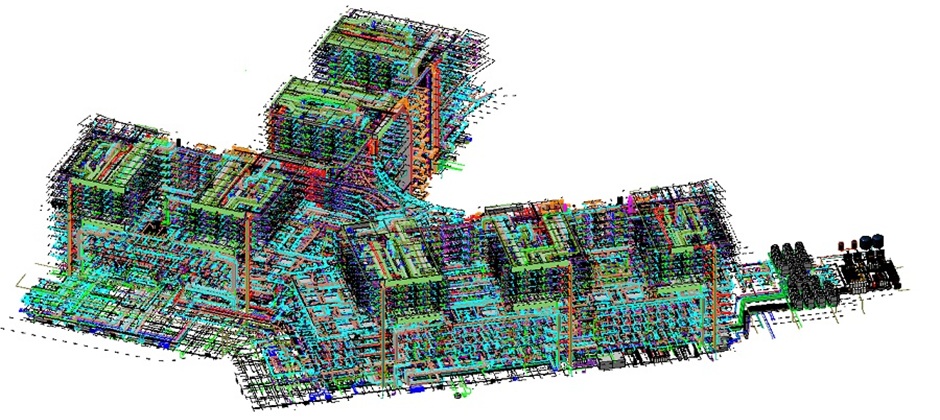
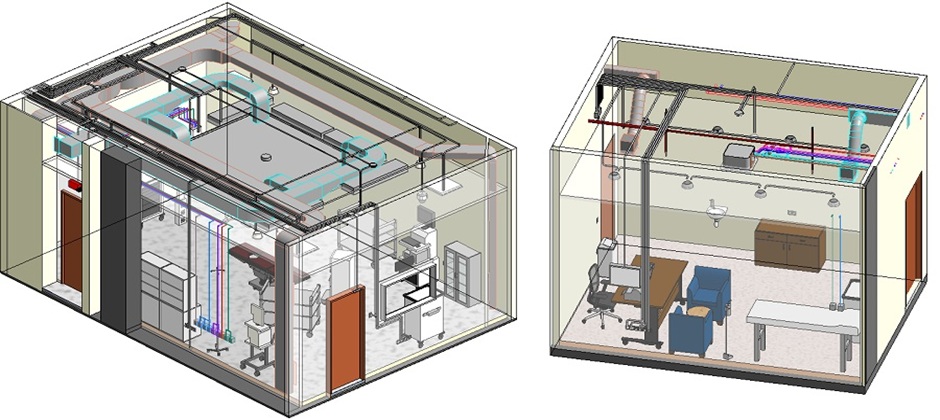
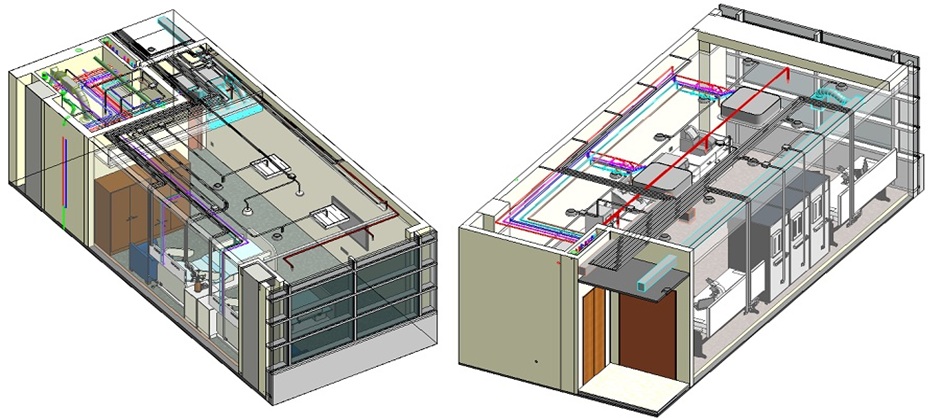
In addition, BIM models were developed to facilitate effective coordination with other disciplines,
resulting in significant time and cost savings during both material procurement and construction phases.
[LPh 5-9].